Showing posts with label string. Show all posts

Monday, 24 February 2014

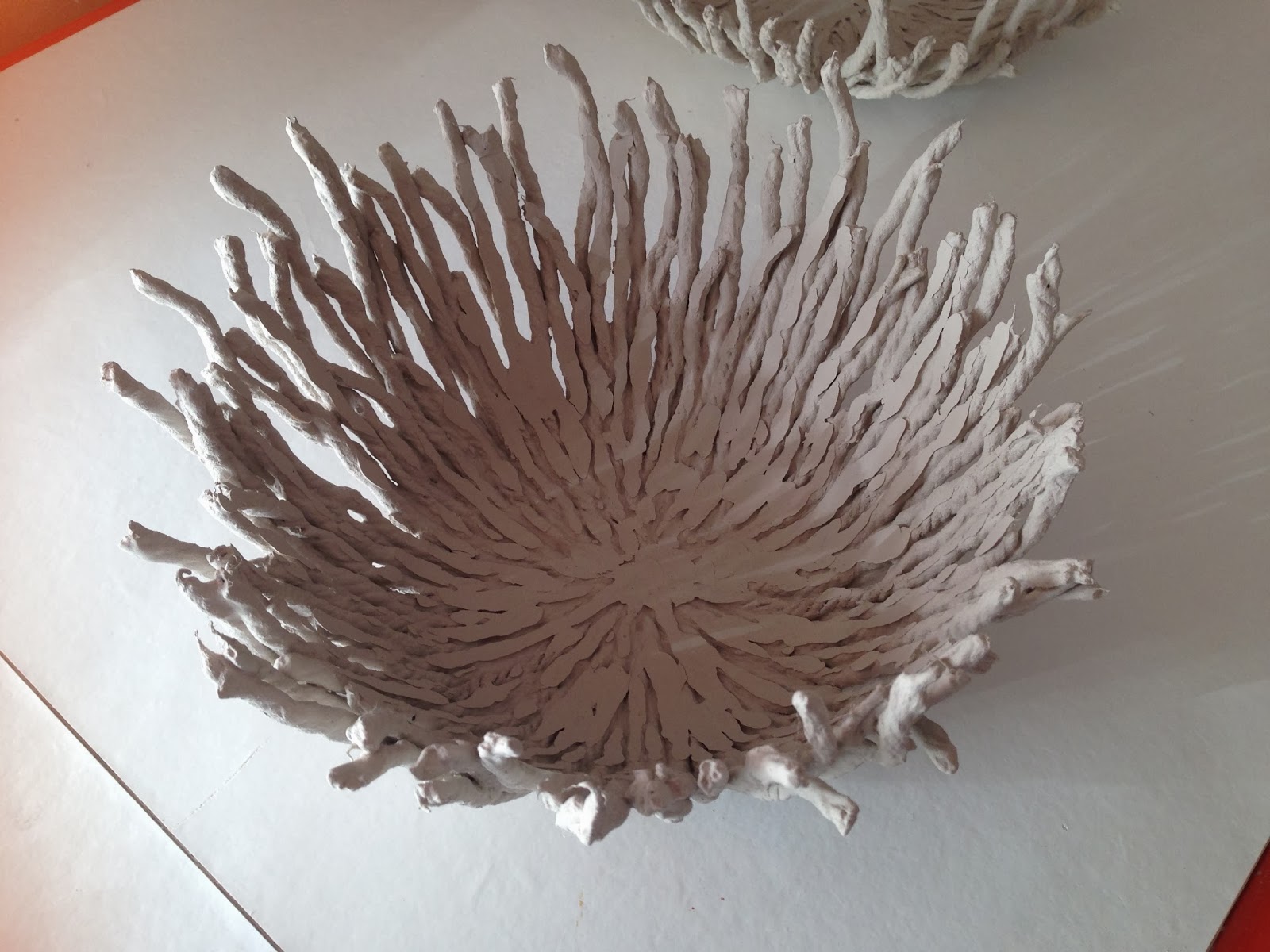
Coral-inspired bowl - all out in one piece (almost)

I held my breath as I opened the kiln half-expecting to see a pile of ceramics sticks on each kiln shelf, but amazingly, each one of these three pieces has survived.

The most delicate was the small random piece, one 'tentacle' broke off immediately on my picking it up out of the kiln - this is probably because none of the tentacles are connected and each one individually is very fragile. This was confirmed by checking the broken piece to find out that the inside of the tentacle was actually hollow - so the slip hadn't really permeated into the string when it was cast.

Coral-inspired tentacle piece - bisque fired
The shallow bowl also survives and felt pretty sturdy (but light) when lifted so there's probably an element of hollowness to it as well.

Coral-inspired flat dish bisque-fired
And the large bowl also came out in one piece. Result!

Coral-inspired medium bowl bisque-fired
Next step is to glaze them gently for the final firing. Here's a closer view of the texture on the outside of the pieces.

Coral-inspired medium bowl bisque-fired (side view)

Sunday, 23 February 2014

Further experiments with coral-inspired bowls

I've just loaded the kiln with these bowls - some more attempts in a variety of sizes and shapes based on the method originally devised to create the bowls. Also some test tiles went in so that I can try out mixing up a wider range of volcanic glazes using silicon carbide.
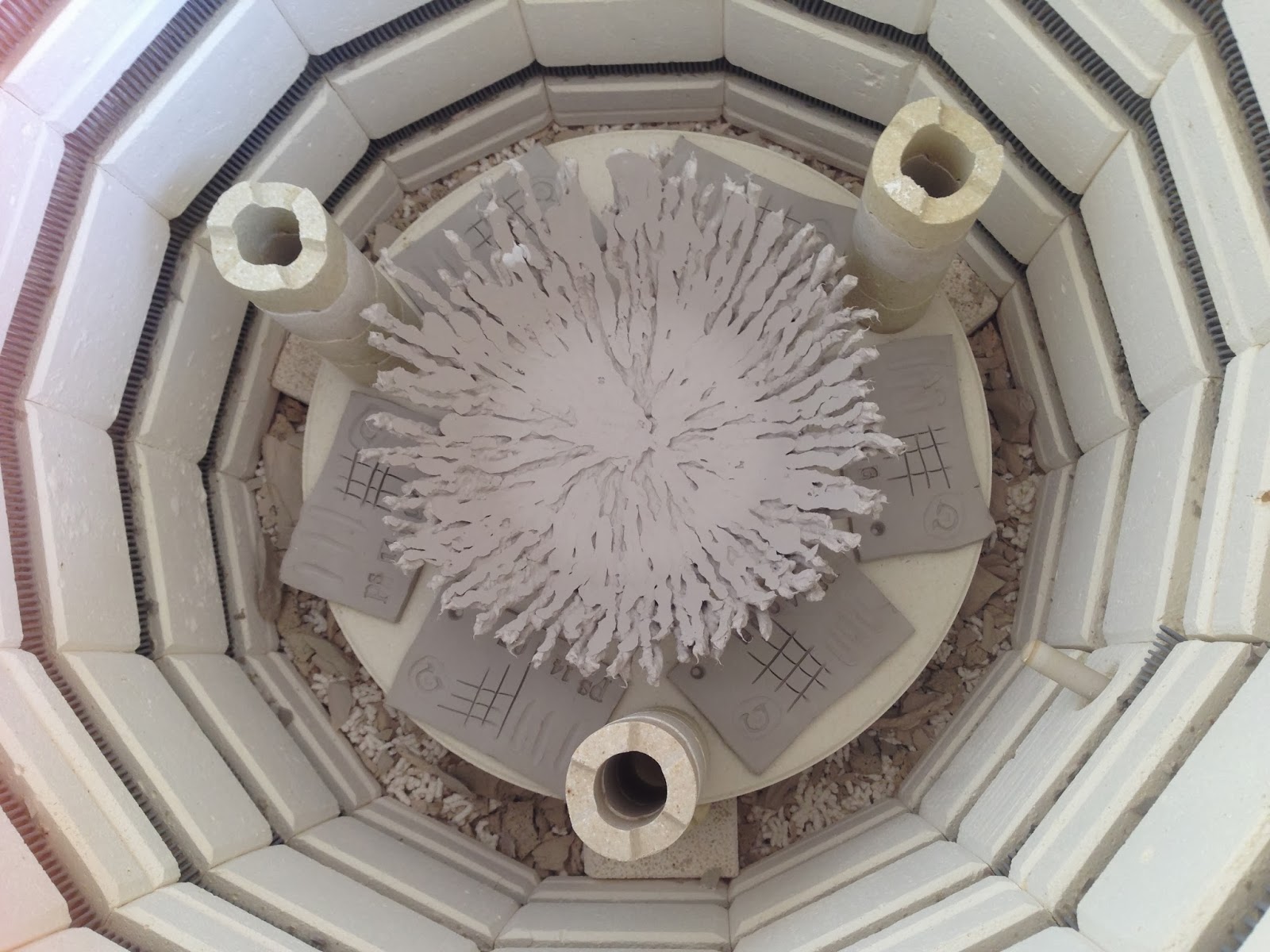
Top-loading kiln with coral bowl and earthenware test tiles
Even though the end result is beautiful, the pieces are fragile and often break during the making process so I have been experimenting with different methods to strengthen the pieces enough to be able to handle them (gently) without them breaking.

Today three pieces went in - one large bowl, a large disk and a smaller 'random piece. These were cast over some new plaster moulds I made by filling various found plastic containers.

The kiln programme for the bisque firing was:

  1. Up to 600ºC at 150ºC per hour
  2. Full power up to 1120ºC
  3. No soak
  4. Cool down

Here are the three greenware pieces:
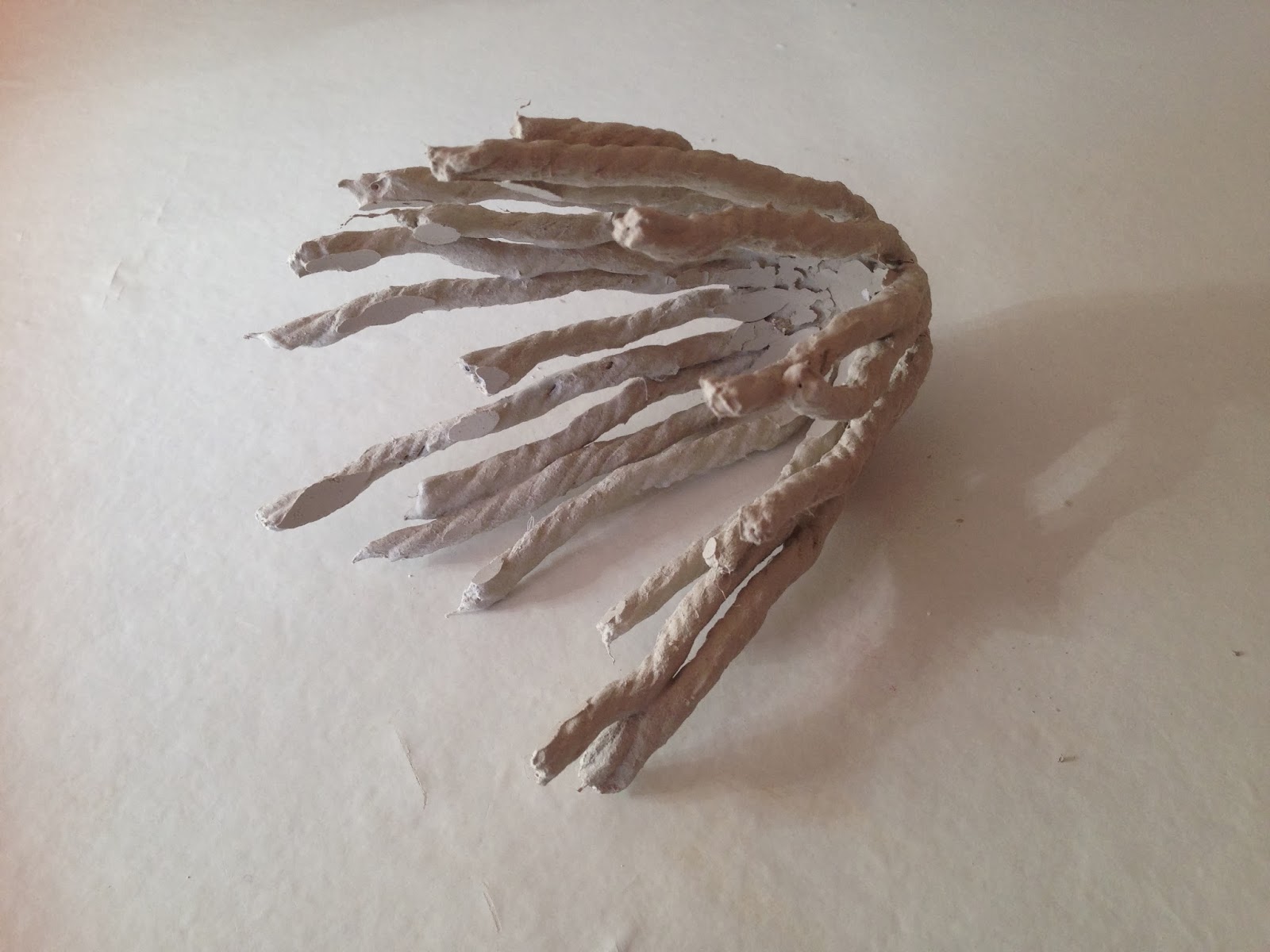
Small coral inspired random piece - greenware

Large coral inspired flat bowl - greenware

Large coral inspired rounded bowl - greenware

With last bowl I made I experimented with glazing and firing the greenware in one go - including adding a double layer of glaze for strength. This time I have layered the 'fingers' of the bowl more densely and allowed more slip (petra smooth) to soak into the string without squeezing so much out again.

The results will be evident when these come out of the kiln later. Previous attempts have shown that some of the pieces were so fragile they didn't even survive the bisque firing.

The firing also contained a number of petra smooth test tiles.

Sunday, 17 February 2013

Firing slip-soaked string cast vessels

Today I fired the slip-soaked string experiments I created recently. This is the second batch of experiments using slip-soaked string, the slip being made from a bucket of mixed reclaimed clay - crank, white raku and petra. The first batch were made using slip that was far too thick and the texture of the string was hardly discernable so for this firing I was less generous with a thinner slip which made for more delicate pieces.

The kiln was fired to 1000 degrees as the bisque firing temperature, going up to 500 degrees at 100 degrees per hour, held there for 30 minutes then up to full temperature and again held there for 30 minutes.

Three of the four string pieces survived the firing intact, the largest and most fragile piece lost some of its 'tentacles' during the firing and more fell off while retrieving it from the kiln. Of the three that survived intact, the most delicate lost one appendage after being taken out - the other two (having layered string) were more sturdy and though very light have not broken.

Next step is to glaze them - I have mixed a blue-green volcanic glaze I have used previously and will try it on the test tiles (petra smooth) that were also in this firing.

So some success and some learnings too - thats why I love experimenting!